Designers: Franck Boistel

Si de diseño de zapatillas de skate hablamos, existe un nombre en la escena que es lo que Tinker Hatfield es para el diseño de zapatillas de running o basketball, su nombre es Franck Boistel.
Seguramente muchos no lo conozcan pero sin lugar a dudas si aman el skate así como las zapatillas de skate, conocen muchísimos modelos que Frank ha diseñado.
Una mente inquieta, capaz de convertir una simple zapatilla en algo icónico.
Desde los pro models más conocidos como las éS Muska, Etnies Vallely, hasta los team models que marcaron a una generación entera de skaters.
Sin lugar a dudas esta es una de las mejores entrevistas que hice.
Ojalá la disfruten tanto como lo disfruté yo, sin mas preámbulos, con ustedes el gran Franck Boistel.

[button size=’small’ style=» text=’ENGLISH VERSION’ icon=» icon_color=» link=’#english’ target=’_self’ color=» hover_color=» border_color=» hover_border_color=» background_color=» hover_background_color=» font_style=» font_weight=» text_align=» margin=»]


Me llamo Franck Boistel. Actualmente soy el diseñador líder de calzado en 5.11 Tactical en California.
He sido diseñador de calzado durante 20 años en los Estados Unidos. Antes de esto, fui Director de Arte en Publicidad en Francia por 10 años.
Soy skater, surfista, ciclista de montaña, ávido amante de la naturaleza. Padre de dos grandes hijos, esposo de una mujer fabulosa que ha sido mi pareja durante treinta años.

–  ¿Cuál fue tu primer creación como diseñador de zapatillas? Ahora mirando un poco para atrás, ¿cambiarías algo?
El primer zapato que diseñé cuando recién me contrató Pierre Andre Senizergues de Etnies en 1997 fue el calzado éS Chad Muska.
Era audaz, torpe, pero hoy es un clásico, así que no, no habría cambiado nada. Vivió bien Recuerdo haber trabajado con Chad y tomar sus ideas para perfeccionar los dibujos y las muestras. Fue genial trabajar con este gran ser humano.

– ¿Qué te hizo querer diseñar zapatillas de skate y quién o qué te inspiró para hacerlo?
No pensé por un segundo que me convertiría en diseñador de calzado. Estaba buscando opciones en mi vida en ese momento. Conocí a Pierre André en California durante el almuerzo y me dijo que necesitaba un diseñador de calzado para su empresa Sole Technology. Le propuse que dibujara unos zapatos durante el fin de semana. El lunes siguiente volví a verlo y le mostré un cuaderno de bocetos lleno de diseños y bocetos de calzado.
Le gustó y me ofreció el trabajo como diseñador de calzado para todas las marcas de Sole Technology. Yo acepté. En pocas palabras, volví a Francia, empaqué mi mierda y me mudé a California con mi esposa y mi bebé en el verano de 1997. Necesitaba un cambio en mi vida, me atrajo Estados Unidos, la propuesta de Pierre apareció en el momento indicado. Estaba mentalizado hasta la muerte!

– ¿Cuáles son algunos de tus diseños favoritos y por qué?
De mi trabajo y de esa época, diría que las Tribo, Vireo, Koston 2, Erik Ellington, serían zapatillas que aún podría usar hoy, por lo que son mis favoritos. Estaban entre voluminosos y delgados, atléticos y divertidos, súper cómodos también. Clásicos.

–  ¿De qué trabajas?
Soy diseñador de calzado. Creo y trabajo con un equipo de desarrolladores de productos y gerentes de marca para dar vida al calzado que cuenta la historia de la marca para la que trabajo.
Soy muy adaptable y tengo la capacidad de comprender el ADN de cualquier marca y plasmarlo en su calzado. Intento no verme influenciado por otros diseños, me di cuenta de que cuanto menos veas otras siluetas, más se te ocurrirán diseños originales. Pero, por supuesto, me mantengo al día con todas las tendencias actuales en calzado, estilo y tecnologías.

–  ¿Trabajaste para otras marcas?
Sí, después de 9 años en Sole Technology, comencé a trabajar por cuenta propia. Trabajé para:
BATA – Toronto
FIVETEN – Ca
TOMS – Santa Monica, Ca
RWORLD – San Clemente, CA.
SALOMON – Annecy, France
CHROME Industries – San Francisco, Ca
LEVIS – Ny
IPATH -Torrance, Ca
ALMOND footwear – Germany
BURTON SNOWBOARDS – Va 
O’NEILL- Irvine, Ca
ROXY- Huntington Beach, Ca
SANUK – Irvine, Ca
WORLD INDUSTRIES – Costa Mesa, Ca
FLOW SNOWBOARDS – San Clemente, Ca
BEBE shoes – Los Angeles, Ca
MANITOBAH MUKLUKS – Canada
MOCACTIA – San Juan Capistrano, Ca
THE PEOPLE’S MOVEMENT, Solana beach, Ca
PRAXIS, Or

– ¿Qué habilidades necesitas para convertirte en un diseñador zapatillas de skate?
Para convertirte en diseñador de calzado necesitas habilidades de dibujo sólidas, habilidades informáticas con Illustrator y photoshop. Debe ser curioso, de mente abierta y ver el mundo como un patio de ideas e inspiración.
Necesitas cultivarte y estar abierto a cualquier cosa, desafiarse a sí mismo a diario, en algún momento, uno tiende a dibujar lo mismo, esto es cuando necesita salir al mundo y resetearse.
Uno también necesita saber cómo se fabrica y construye el calzado, eso ayuda … El estar abierto a las personas, trabajé con muchos equipos y personas diferentes durante mi carrera y debes ser flexible, amable y dispuesto. Diseñar calzado es un trabajo en equipo. Olvida tu ego, lo que diseñas, otras personas tienen derecho a decirlo.

“Intento no verme influenciado por otros diseños, me di cuenta de que cuanto menos veas otras siluetas, más se te ocurrirán diseños originales”

– Cuéntanos un poco sobre el proceso de creación de una zapatilla, desde el papel hasta el producto final.
Siempre comienza con un brief o una idea tuya, de alguien con quien trabajas, o de un skater del team.
Mi proceso ha estado mutando su forma durante los últimos 20 años y lo primero que hago es visualizar el producto antes de dibujarlo. Paso un tiempo tratando de verlo en mi cabeza. También miro zapatillas que se relacionen, ideo, busco inspiración de cosas completamente al azar, pero también cosas relacionadas.
Entonces, cuando tengo una imagen mental de a dónde quiero ir, comienzo a dibujar. No pierdo el tiempo haciendo bocetos una y otra vez, antes de hacer un boceto tengo una buena visión mental de cómo debería ser el diseño. Luego encontraré un último que coincida con lo que quiero y, dependiendo de la complejidad, pegaré un estilo de calzado con forma relacionada y dibujaré el diseño para verlo (3D) … Luego finalizaré los bocetos de suela / parte superior y entrar en las especificaciones técnicas, dibujos detallados de todo, incluyendo imágenes de referencia para materiales, texturas, dimensiones, etc. … Las muestras comienzan a llegar, uno las revisa hasta que tenga una muestra final . Se necesita mucho trabajo y consistencia, y es importante que el diseñador vea el proceso todo el tiempo.

–  ¿Cuánto demora todo ese proceso?
Depende, generalmente 6 meses para productos simples.
Zapatillas mas técnicas, que hay que probar el producto antes de su lanzamiento. rondan un calendario de 12 meses a 24 o más …

– ¿Cuáles son algunas dificultades para convertirse en un diseñador de calzado de skate que la mayoría de la gente no conoce?
Encontrar la compañía que te dará tu primer trabajo.
Mantenerse en curso y saber qué tendrás éxitos y fracasos.
Cada zapato que diseñen no será exitoso.
Ser humilde, siempre hay un mejor diseñador que tú.
¡Manténgase enfocados, inspirado, permanezca abierto, manténgase fresco!
No diseñe la misma mierda una y otra vez, sea audaz, pruebe cosas, manténgase actualizado, aprenda, vuelva a aprender … Podría seguir y seguir …

– ¿Cuáles son tus materiales favoritos para trabajar? ¿Prefieres siluetas simples o zapatillas más técnicas?

Trabajé en todo tipo de zapatillas, desde Skate hasta Snow, pasando por el estilo de vida, la moda, los tacones altos y la súper tecnología.
Amo el cuero Las zapatillas de cuero son mis favoritas, me gusta Clae Footwear, Greats, Filling Pieces, ese es mi estilo. Pero me encanta el canvas y si pudiera hacer todos mis zapatillas en canvas lo haría. Botas, zapatos de moda, todo. Me encanta la tendencia de punto, aunque lo veo en un punto de inflexión, ¡necesito una actualización! … Luego aparece un zapato de cuero como el último Adidas NMD Hender Scheme y amo mi vida otra vez … Me gusta la tecnología cuando la estética no ha sido comprometida por la tecnología ….. Algunos zapatos de tecnología simplemente apestan … ¡Puedes embellecer esto un poco, no duele! … 

– ¿Cuál es tu era favorita de diseño de zapatillas de skate?
La era en la que estaba, en 19992000. Realmente estábamos experimentando libremente con el diseño de zapatillas de Skateboard y fue una era bendecida para la creatividad. Tengo muchos recuerdos trabajando con profesionales como Eric Koston, Andrew Reynolds, Ed Templeton y todos los demás pro en ese momento, me divertí mucho diseñando zapatillas.

“Uno debe ser curioso, de mente abierta y ver el mundo como un patio de ideas e inspiración.”

– Al diseñar un pro model, ¿se involucran los skaters en el proceso de diseño? ¿Cómo es trabajar con ellos?
Sí, siempre están involucrados, ya sea al principio si realmente les gusta o al final si nos dejan hacer lo que creemos que es bueno.
Todo depende de los skaters. Tuve todos los escenarios de casos. A Eric Koston siempre se le ocurrieron el 95% del diseño el traía el modelo realizado por él, por lo que solo estábamos ejecutando sus diseños.
Otros riders nos dieron bocetos, a veces difíciles, nuestro trabajo consistía en proponer varias versiones y hacer muestras de sus visiones. Algunos nos dejaban dibujar desde cero y elegían el diseño que más les gustaba. Siempre fue divertido trabajar con skaters, nunca tuve una mala experiencia, todos eran chicos y chicas geniales. Sin embargo, uno ha sido un poco extraño.
Has oído hablar del zapato Tom Penny para éS, ¿verdad? Don Brown le pidió a Tom Penny, que en ese momento que vivía en Francia, que nos dijera qué le gustaría para un modelo profesional. Nos envió una bota de senderismo de Columbia en la que patinaba. La suela estaba desgastada en la parte superior, pero el la patinaba … Se nos ocurrió algo parecido a una bota, pero no estoy convencido de que hicimos lo mejor trabajo aquí …..

“Diseñar zapatillas es un trabajo en equipo. Olvida tu ego, tus diseños deben ser criticados por otras personas.”

– En el último año, la tecnología finalmente volvió a las zapatillas de skate. Qué piensas sobre esto. ¿Prefieres las siluetas más simples?
El calzado de skate que remonta a siluetas más simples tiene sentido. No necesitas todo esa tecnología para andar en patineta, necesitas una buena sensación de tabla, cierta protección en lugares estratégicos, algo de amortiguación, comodidad, pero al final no necesitas todas las cosas de super tecnología a simple vista. Me gusta el hecho de que la tecnología se está volviendo más simple, en mejores lugares y minimiza las características que buscas en una zapatilla de skate.

“Me gusta la tecnología cuando la estética no ha sido comprometida por la misma”

– De todas las zapatillas que diseñaste, ¿cuáles son tus favoritas y por qué?
éS Vireo, éS Tribo, éS Koston 2, probablemente mis tres favoritos, aunque a Eric Koston se le ocurrió la idea del diseño, pude darle un toque especial. Me encantan estos tres estilos porque son únicos y representan el apogeo de una era de zapatillas de skate técnicas, inspiradas en el crosstrainer. Me las pondría de nuevo si pudiera encontrar alguno …

¿Qué te hizo querer diseñar zapatillas de skate y quién o qué te inspiró a hacerlo?
No sabía que me convertiría en diseñadora de calzado. Fui Director de Arte y diseñador gráfico durante 10 años en Francia y pensé en llevar esta carrera a los Estados Unidos. En cambio, me reuní con PierreAndre Senizergues de Sole Technology y él me preguntó si podía diseñar zapatillas. El resto es historia, comencé a trabajar en Sole Technology y me quedé allí durante 9 años. Luego me convertí en diseñador independiente y diseñé zapatillas para muchas más empresas … eso es todo. Me encanta y soy bueno en eso.

– Si tuviera que elegir sus 5 zapatillas de skate favoritas hoy, ¿cuáles serían? Y la vieja escuela?
Voy a ser honesto, no sigo las zapatillas de skate en estos días como solía hacerlo, pasé a otros estilos. He estado diseñando zapatillas para Adidas y Fiveten en los últimos dos años y me he enfocado en el ciclismo de montaña, la escalada y el calzado para exteriores. El pasado septiembre comencé a trabajar para una empresa llamada 5.11 táctica y diseño botas, zapatillas, estilo de vida y zapatos de trabajo.
Si tuviera que elegir un par de estilos que me gustan hoy, sería: éS Accel slim, Lakai, Supra Saint and Flow, Vans Old skool pro ……

“En el 99/00 estábamos experimentando libremente con el diseño de zapatillas de Skateboard, fue una era bendecida para la creatividad”

– Para cerrar, algo que quieras decir a todos aquellos que quieran adentrarse en el mundo del diseño de las zapatillas de skate, ¿alguna recomendación?
Sea perseverante para ingresar, una vez que esté dentro, sea y trabaje como un profesional, pase el tiempo que necesita para que las cosas sucedan, sea amable, trabaje con el equipo, sea honesto, espontáneo, amigable, trabaje duro, dibuje todo el tiempo , Piensa en el futuro y piensa con claridad ¡Serán grandes!


My name is Franck Boistel. I am at the moment footwear designer lead at 5.11 Tactical in California.
I have been a footwear designer for 20 years in the US. Prior to this I was an Art Director in Advertising in France for 10 years.
I am a skateboarder, surfer, Mountain biker, avid outdoorsman. Father of two great sons, Husband to a fabulous Women that has been my partner for thirty years.


– What was your first creation as a shoe designer and looking back on it, do you wish you can change anything on it now?

The first shoe I designed when I was freshly hired by Pierre Andre Senizergues of Etnies in 1997 was the ES footwear Chad Muska.It was bold, clunky but today it is a classic so, no, I wouldn’t have changed anything on it. It lived well. I remember working with Chad and taking his ideas to perfect the drawings and samples. It was great working with this great human being.

– What made you want to design skate shoes and who or what inspired you to do so?

I didn’t thought for a second that I would become a footwear designer. I was looking for options in my life at the time. I met Pierre Andre in California over lunch and he told me he needed a footwear designer for his company Sole Technology. I proposed him to draw some shoes over the weekend. The following Monday I came back to see him and showed him a filled sketchbook of footwear designs and sketches.He liked it and offered me the job on the spot of First footwear designer for all SoleTechnology brands. I accepted. Long story short, went back to France, Packed my shit and moved to California with my wife and baby boy in the summer of 1997. I needed a change in my life, I was attracted by the USA, Pierre’s proposition came up at the right time. I was psyched to death!

– Who are some of your favorite designs and why?
From my work and from that Era, i would say the Tribo, Vireo, Koston 2, Erik Ellington, would be shoes I could still wear today, so they are my favorites. They were in between bulky and slim, athletic and fun, super comfy as well. Boneless classics today.

– What is your job?

I am a footwear designer. I create and work with a team of product developers and brand managers to bring to life footwear that tells the story of the brand I work for.I am very adaptable and have a capacity to understand any brand DNA and deliver it to its footwear. I don’t embarrass myself with too much outside influence as I realized that the less you see other shoes, the more you will come up with original designs. But of course, i stay up to date with all current trends in footwear, style and technologies.

– Did you work for other brands?

Yes, After 9 years at Sole Technology, I started to work freelance. I worked for
BATA – Toronto
FIVETEN – Ca
TOMS – Santa Monica, Ca
RWORLD – San Clemente, CA.
SALOMON – Annecy, France
CHROME Industries – San Francisco, Ca
LEVIS – Ny
IPATH -Torrance, Ca
ALMOND footwear – Germany
BURTON SNOWBOARDS – Va 
O’NEILL- Irvine, Ca
ROXY- Huntington Beach, Ca
SANUK – Irvine, Ca
WORLD INDUSTRIES – Costa Mesa, Ca
FLOW SNOWBOARDS – San Clemente, Ca
BEBE shoes – Los Angeles, Ca
MANITOBAH MUKLUKS – Canada
MOCACTIA – San Juan Capistrano, Ca
THE PEOPLE’S MOVEMENT, Solana beach, Ca
PRAXIS, Or

– What skills do you need to become a skateboard designer?

To become a footwear designer you need solid drawing skills, Computer skills with Illustrator and photoshop. You need to be curious, open minded and see the world as a playground of ideas and inspiration. You need also to cultivate yourself and be open to anything. You also need to accept to challenge yourself on a daily basis, sometime, you tend to draw the same thing, this is when you need to go out in the world and reset the buttons.You also need to know how footwear is made and build, that helps…..You also need to be open to people. I worked with many different teams and people during my career and you need to be flexible, nice, and willing. Designingfootwear is a team work. Forget your ego, What you design, other people have a right of say about it.

– Tell us a little about the process of creating a shoe, from the paper to the final product.

It always start with a brief or an idea that someone you work with, or you or a rider has. My process has been shaping for the last 20 years and the first thing I am going to do is visualize the product before i draw it. I am going to spend some time trying to see it in my head. I will also look at related footwear, ideas, I am going to look for inspiration, completely random stuff but also related things. Then only when I have a mental picture of where I want to go I will start sketching. I don’t waste time sketching over and over, before I sketch I have a pretty good mental visual of what the shoe should look like. Then I will find a last that will match what I want and depending on the complexity of the brief, I will either tape up a related shaped footwear style and draw the design on it to see it (3D)…Then I will finalize the sketchs of outsole/upper and get into the technical specs, detailed cad drawings of everything, including ref pictures for materials, textures, dimensions, etc….. Samples start to come in and you revise them until you have a confirmation sample. it takes a lot of work and consistency and it is important for the designer to see the process through the entire time.

– Generally, how long has that process taken?
It depends, usually 6 months for easy lifestyle products, usually more for technical as you have to test the product before launching. Shoe Company goes from a 12 month calendar to 24 for technical shoes or more..

– What are some difficulties that lie in becoming a skate shoe designer that most people don’t know about?

Finding the company that will give you your first job staying the course and knowing that you will have successes and failures. Every shoe you will design will not be the banger you aspire it to be. Be humble, there is always a better designer than yourself. Stay focus, stay inspired, stay open, stay cool!….
Don’t design the same shit over and over, be bold, try things, keep yourself up to date, learn, relearn……I could go on and on….

– What are your favorite materials to work with? Do you prefer simple silhouettes, or tech?
It depends on the look of the shoe. If it’s a skate shoe I prefer suede. If it’s a comfortable lifestyle shoe like the Scout, I prefer a lightweight breathable material like mesh. When it comes to more technical designs with a higher price point, I like using seamless panels on the upper for a more futuristic look.

– What is your favorite era of skate shoes design?
The era I was in, back in 1999-2000. We were really experimenting freely with Skateboard footwear and it was a blessed era for creativity. I have lots of memories working with the pros like E.Koston, Andrew Reynolds, Ed Templeton and all the other pros at the time and having so much fun designing footwear.

– When designing a pro model, do skaters get involved in the design process? What is it like working with them?
Yes, they are always involve either at the beginning if they really are into it or at the end if they let us do what we think is good. it all depend of the riders. I had all case scenarios. Eric Koston always came up with 95% of the drawing done by him, so we were just executing his designs, Other riders gave us sketches, sometime rough but we could see where he wanted to do, our job was just to propose several versions and make samples of their visions. Some were letting us draw from scratch and they would pick the design they liked the most. It was always fun to work with riders, I never had a bad experience, they were all super cool guys and girls. One though has been a bit strange, You heard about the Tom Penny shoe for éS right? Don Brown asked Tom Penny at the time living in France to tell us what he would like for a pro model. He sent us a columbia hiking boot that he skated in. The outsole was worn out to the upper, he skated the shit out of it….We came up with something a bit boot like but I am not convinced we did the best job here…..

– In the last year, technology finally returned to skate shoes. What do you think about this. Do you prefer the simpler silhouettes?
Skateboard footwear going back to more simple silhouettes is making sense. You don’t need all that shoe for skateboarding, you need some good board feel, some protection in strategic spots, some cushioning, comfort, but at the end you don’t need all the super tech stuff in plain sight. I like the fact that the tech is getting smaller, in better places and is minimized whatever features you are looking for in a skate shoe.

– Of all the shoes you designed, what are your favorites and why?
éS vireo, éS tribo, éS Koston 2, probably my three favorites although E. Koston came up with the idea of the design, I was able to put my flare into it. I love those three styles because they are unique and represent the apogee of an era of technical, cross trainer inspired Skate shoes. I would wear those again if I could find any….

What made you want to design skate shoes and who or what inspired you to do so?
I didn’t know I would became a footwear designer. I was an ArtDirector and graphic designer for 10 years in France and I thought I would take this career to the US. Instead I met with Pierre-Andre Senizergues of SoleTechnology and he asked me if I could design shoes. The rest is history, I started to work at SoleTechnology and I stayed there for 9 years. Then I went to be independent and I designed shoes for many more companies….this is it. I love it and I am good at it.

– If you had to choose your 5 favorite skate shoes today, what would they be? And the old school?
I am going to be honest, I don’t follow skate shoes these days as I used to, I moved on to other styles. I have been designing shoes for Adidas and Fiveten the past two years and my focus has been on Mountain Biking, climbing and outdoor footwear. The last September I started to work for a company called 5.11 tactical and I design Boots, sneakers, lifestyle and duty shoes.If I had to pick a couple of styles I like today, it would be: éS Accel slim, Lakai krooked,  Supra Saint and Flow, Vans Old skool pro……

– To close, something you want to say to all those who want to get into the world of skate shoe design, any recommendations?
Be perseverant to get in, once you are in, be and work like a pro, Spend the time you need to make things happen, be nice, work with the team, Be honest, spontaneous, Friendly, Work hard, sketch all the time, Think ahead and think clearly. You will be great!


[latest_post type=’boxes’ number_of_posts=’3′ number_of_colums=’3′ order_by=’menu_order’ order=’ASC’ category=’Designers’ text_length=» title_tag=’h4′ display_category=’0′ display_time=’0′ display_comments=’0′ display_like=’0′ display_share=’0′]

Designers: Quin Fernandes

Después de un largo letargo, vuelve una de mis secciones favoritas, Designers.
Esta vez con el diseñador de DVS y Airwalk, Quin Fernandes.
En esta entrevista Quin nos cuenta un poco como empezó todo para el. Desde el proceso de diseñar unas zapatillas de skate, y alguno de sus modelos favoritos de todos los tiempo.
Que disfruten de la entrevista.

[button size=’small’ style=» text=’ENGLISH VERSION’ icon=» icon_color=» link=’#english’ target=’_self’ color=» hover_color=» border_color=» hover_border_color=» background_color=» hover_background_color=» font_style=» font_weight=» text_align=» margin=»]


Empecé a patinar de chico y rápidamente me enamore de las zapatillas de skate. También pasé por una buena cantidad de pares, ya que pueden destruirse fácilmente. Más tarde, después de estudiar diseño industrial en la universidad, mi objetivo era conseguir un trabajo de diseño de calzado para poder profundizar mi obsesión con las zapatillas de skate (y también recibir un pago por ello). He estado diseñando para DVS y Airwalk durante los últimos cuatro años.

–  ¿Cúal fue tu primer creación como diseñador de zapatillas? Ahora mirando un poco para atrás, ¿cambiarías algo?
Trabajé en calzado deportivo de una marca privada durante un tiempo antes de comenzar con las zapatillas de skate, así que creo que mi primera creación que entró en producción fue inspirada por las Adidas jogger. Si pudiera regresar, definitivamente mejoraría el diseño, pero creo que siempre me sentiré así a medida que pase el tiempo y mejoren mis habilidades como diseñador.

– ¿Qué te hizo querer diseñar zapatillas de skate y quién o qué te inspiró para hacerlo?
En sexto grado comencé a andar en skate y rápidamente consumió mi vida. Pasé todo mi tiempo aprendiendo trucos, estudiando los distintos modelos de zapatillas y soñando con maneras de mejorarlas.

– ¿Quiénes son algunos de tus diseñadores favoritos y por qué?
Me inspiran tipos como Jimmy Gorecki y Salehe Bembury. Realmente aprecio y admiro a los artistas que viven y respiran su propio estilo único, ya sea algo simple o completamente poco ortodoxo.

–  ¿De qué trabajas?
Soy diseñador de productos para DVS y Airwalk.

«Debe tener los ojos abiertos en todo momento para comprender hacia dónde van las tendencias.»

–  ¿Trabajaste para otras marcas?
Diseñe zapatillas para Tapout y Easton por un tiempo, lo cual fue bastante genial.

 – ¿Qué habilidades necesitas para convertirte en un diseñador zapatillas de skate?
Debe tener los ojos abiertos en todo momento para comprender hacia dónde van las tendencias. Es importante que pueda generar una variedad de ideas/bocetos rápidamente y de una manera que realmente transmita su visión. Necesitas esa pasión e impulso para diseñar un calzado que satisfaga lo que los skaters realmente necesitan, en lugar de algo que te guste o quieras ver.

– Cuéntanos un poco sobre el proceso de creación de una zapatilla, desde el papel hasta el producto final.
Después de elegir un concepto, se pule el boceto, luego se debe crear un paquete tecnológico para que los fabricantes comprendan cómo se debe construir la zapatilla. Darle la forma,  la suela viene después.
Este paso tarda más en terminar, porque se necesita hacer un molde de acero. A partir de ahí, debes trabajar con la fábrica para conseguir que el prototipo / materiales / la suela exterior se vean lo mejor posible. Una vez que las muestras se ven exactamente como usted quiere, el equipo de ventas las toma de allí y las saca al mundo.

–  ¿Cuánto demora todo ese proceso?
Como un año.

– ¿Cuáles son algunas dificultades para convertirse en un diseñador de calzado de skate que la mayoría de la gente no conoce?
Es importante comprender que no está diseñando productos para vos, es para el consumidor final. Conocer al público al que está pensado el producto es fundamental.

– ¿Cuáles son tus materiales favoritos para trabajar? ¿Prefieres siluetas simples o zapatillas más técnicas?
Me gusta diseñar piezas moldeadas para las partes superiores porque se siente techy y disfruto mirando planos. Al equipo de fijación de precios no le gusta tanto (crear moldes es costoso). Disfruto trabajando en calzado técnico realmente desarrollado.

«Es importante comprender que no está diseñando productos para vos»

– ¿Cuál es tu era favorita de diseño de zapatillas de skate?
Comencé a patinar a principios de la década de 2000, así que definitivamente aprecio mucho esos estilos, pero también me atraen los zapatillas gigantes, con mucha tecnología de mediados de los 90.

– ¿Con qué cosas usualmente te inspiras, comienzas desde cero o eliges una zapatilla y la modificas?
Instagram es una herramienta útil para mí. Sigo a diseñadores y marcas para ver en qué están trabajando todos. Pero cualquier cosa, todo se puede usar como inspiración para diseñar unas zapatillas.

– Al diseñar un pro model, ¿se involucran los skaters en el proceso de diseño? ¿Cómo es trabajar con ellos?
Si, desde el principio. Los profesionales saben qué zapatillas les gusta patinar, por lo que generalmente es donde comienza la forma. Luego, siempre que consideremos que tiene un lugar en la línea, podemos desarrollar una zapatilla que quieran patinar y que podamos comercializar. Trabajar con ellos es increíble, la mayoría han sido muy relajados y abiertos a mis ideas y conceptos. Recientemente he trabajado en el modelo profesional de Greg Lutzka, lo cual es genial para mí porque, cuando era niño, constantemente miraba sus videos.

– En el último año, la tecnología finalmente volvió a las zapatillas de skate. Qué piensas sobre esto. ¿Prefieres las siluetas más simples?
Estoy totalmente metido en eso, como mencioné, prefiero trabajar en diseños que incorporen aspectos tecnológicos.

– De todas las zapatillas que diseñaste, ¿cuáles son tus favoritas y por qué?
Mi modelo de  DVS favorito se llama Devious y estará disponible en la primavera de 2020. Es el primer modelo de skate que sentí que tenía el control creativo en cuanto al diseño y los materiales. Es una especie de versión moderna del clásico estilo chunky y no puedo esperar para usarlo.

– Si tuviera que elegir sus 5 zapatillas de skate favoritas hoy, ¿cuáles serían? Y la vieja escuela?

Osiris D3, ver este modelo fue uno de los motivos por los cuales empecé a patinar.
Adidas Busenitz
DC
Josh Kalis
Airwalk Prototype 600
(Justo tuve que modificar algunas cosas de este modelo, por suerte ya se encuentra disponible)
éS Accel

«Instagram es una herramienta útil para mí. Sigo a diseñadores y marcas para ver en qué están trabajando»

– ¿Puedes contarnos un poco sobre lo que DVS y Airwalk tienen para ofrecer en los próximos años?
Habrá algunos nuevos modelos tech y de  lifestyle que nos entusiasman bastante. Y mucho más de lo que no puedo hablar, esten atentos.

– ¿Qué modelo diría que ha sido el más bienvenido por las tiendas y los consumidores?
El Comanche 2.0 ha sido bastante popular y bien recibido.

– Para cerrar, algo que quieras decir a todos aquellos que quieran adentrarse en el mundo del diseño de las zapatillas de skate, ¿alguna recomendación?
Boceta, patina, Boceta, patina. Sigue a tus skaters favoritos; Presta atención a lo que llevan puesto. Siempre estará absorbiendo nuevas inspiraciones y tendencias. Y, por último, no dudes en presentarte y hacer conexiones con personas dentro y fuera de la industria.


I started skating at a young age and became fascinated with skate shoes. I also went through my fair share of pairs as they can easily be destroyed. Later on after studying industrial design in college, my goal was to land a footwear design job so I could further my obsession with skate shoes (and also get paid for it). I’ve now been designing for DVS and Airwalk for the last four years.

What was your first creation as a shoe designer and looking back on it, do you wish you can change anything on it now?
I worked on athletic private label footwear for a while before starting on skate shoes, so I think my first creation that went into production was inspired by an Adidas jogger. If I could go back I definitely would improve the design, but I think I will always feel that way as time goes on and my skillset improves.

What made you want to design skate shoes and who or what inspired you to do so?
In 6th grade I started skateboarding and it quickly consumed my life. I spent all my time learning tricks, studying the footwear and daydreaming of ways on how to improve them.

Who are some of your favorite designers and why?
I’m inspired by guys like Jimmy Gorecki and Salehe Bembury. I really appreciate and admire artists that live and breathe their own unique style whether it’s something simple or something completely unorthodox. 

What is your job?
I’m a product designer for DVS and Airwalk.

Did you work for other brands?
I designed athletic cleats for Tapout and Easton for a while which was pretty cool.

What skills do you need to become a shoe designer?
You need to have your eyes open at all times to understand where trends are going. It’s important that you can generate a range of ideas/sketches quickly and in a way that really gets your vision across. You need that passion and drive in order to design footwear that caters to what skaters really need and want as opposed to just something that you like or want to see. 

Tell us a little about the process of creating a shoe, from the paper to the final product.
After choosing a concept, the sketch needs to be refined and then a tech pack needs to be created for the manufacturers to understand how the shoe needs to be built. A last needs to be made for the shape you want. The outsole comes next. This step takes the longest to finish because a steel mold needs to be made. From there you need to work with the factory on getting the prototype/materials/outsole to look the best that it can. Once the samples look exactly like you want them to, the sales team takes it from there and gets it out into the world. 

Generally, how long has that process taken?
About a year.

What are some difficulties that lie in becoming a skate shoe designer that most people don’t know about?
It’s important to understand that you are not designing products for yourself, it is for the consumer. Know your customer and provide them with something they will think is cool and enjoy.

What are your favorite materials to work with? Do you prefer simple silhouettes, or tech?
I like designing molded pieces for uppers because it feels techy and I enjoy looking at blueprints. The pricing team doesn’t like it as much (creating molds is costly). I enjoy working on really built up, technical shoes.

What is your favorite era of skate shoes design?
I started skating in the early 2000s so I definitely have a strong appreciation for those styles, but I also find myself drawn to bulky tech shoes from the mid 90s as well.

With what things do you usually inspire yourself, do you start from zero, or do you choose a shoe and modify it?
Instagram is a useful tool for me. I follow designers and brands to see what everyone is working on. But anything and everything can be used as inspiration for a shoe idea.

When designing a pro model, do skaters get involved in the design process? What is it like working with them?
Yes, from the beginning. The pros know what shoes they like to skate so that’s usually where the shape starts. Then, as long as we feel it has a place in the line, we can work up a shoe that they want to skate and that we can market. Working with them is pretty awesome, most have been very laid back and open to my ideas and concepts. Recently I’ve gotten to work on Greg Lutzka’s pro model which is so cool to me because, as a kid, I was constantly watching skate videos featuring him.

In the last year, technology finally returned to skate shoes. What do you think about this. Do you prefer the simpler silhouettes?
I’m totally into it, like I mentioned I prefer working on tech shoes.

Of all the sneakers you designed, what are your favorites and why?
My favorite DVS shoe is called the Devious and it will be available Spring 2020. It is the first skate shoe that I felt like I had the most creative control in regards to the design and materials. It’s sort of a modern take on the classic chunky style and I can’t wait to wear it.

If you had to choose your 5 favorite skate shoes today, what would they be? And the old school?

Osiris D3, seeing this shoe actually made me want to start skating.
Adidas Busenitz
DC Josh Kalis
Airwalk Prototype 600 (Just got to rework this style, available now)
éS Accel

Can you tell us a little about what DVS/AIRWALK has to offer for the next few years?
There will be some new performance and lifestyle shoes that we’re pretty excited about. And a lot more that I can’t speak about, stay tuned.

Which model would you say has been the most welcomed by shops and consumers?
The Comanche 2.0 has been pretty popular and well received.

To close, something you want to say to all those who want to get into the world of skate shoe design, any recommendations?

Sketch, skate, sketch, skate. Follow your favorite skaters; pay attention to what they’re wearing. Always be absorbing new inspiration and trends. And lastly, don’t be hesitant to put yourself out there and make connections with people both in and outside of the industry.


[latest_post type=’boxes’ number_of_posts=’3′ number_of_colums=’3′ order_by=’menu_order’ order=’DESC’ category=’Designers’ text_length=» title_tag=’h4′ display_category=’0′ display_time=’0′ display_comments=’0′ display_like=’0′ display_share=’0′]

Designers: Rick Marmolijo

Designers: Rick Marmolijo

Una nueva entrega de esta gran sección, en donde entrevistamos a los creadores de todos esos modelos de zapatillas de skate que nos encantan.
En esta oportunidad tenemos el honor de contar con Rick Marmolijo, diseñador de Etnies de su hermana menor, éS.
Podríamos decir que Rick es el que ha marcado una nueva dirección en estas dos marcas, diseñando todas esas siluetas que se han convertido en clásicos para ambas marcas.
Sin mas preámbulos, los dejo con una gran nota.


[button size=’small’ style=» text=’ENGLISH VERSION’ icon=» icon_color=» link=’#english’ target=’_self’ color=» hover_color=» border_color=» hover_border_color=» background_color=» hover_background_color=» font_style=» font_weight=» text_align=» margin=»]


Mi nombre es Rick Marmolijo y soy el director de diseño de Etnies and éS Footwear. Patino desde 1987 y he estado diseñando zapatillas de skate desde 1998. El skateboarding siempre ha sido mi pasión y tengo la suerte de venir a trabajar todos los días haciendo lo que amo.


–  ¿Cúal fue tu primer creación como diseñador de zapatillas? Ahora mirando un poco para atrás, ¿cambiarías algo?
Mi primer trabajo en la industria fue en 1998 para una marca llamada Kastel como asistente de diseño. Mi primer diseño fue un modelo llamado Zagato que estaba inspirado en el atletismo, era una silueta con mucho acolchado. Esa era la tendencia en ese momento. Todavía tengo un par en mi archivo y no cambiaría nada, ya que muestra un momento importante en mi vida al descubrir mi estilo de diseño. Solo recuerdo que estaba maravillada cuando vi que mis bocetos finalmente se llevaban a cabo.


Designers: Rick Marmolijo


– ¿Qué te hizo querer diseñar zapatillas de skate y quién o qué te inspiró para hacerlo?
Uno de mis mejores amigos con los que patinaba, consiguió un trabajo de diseño de zapatillas de skate para Kastel. Cuando íbamos a patinar, siempre aparecía con muestras de sus diseños para ver cómo podía mejorar la funcionalidad antes de que salieran a producción. Yo estaba tomando algunas clases de arte en la universidad en ese momento y siempre recuerdo haberle dado algunas ideas de diseño. Un día decidió que necesitaba ayuda y me pidió que le mostrara algunos diseños. Luego se los mostró a sus jefes, el resto es historia.


– ¿Quiénes son algunos de tus diseñadores favoritos y por qué?
Cuando trabajé en DVS de 2003 a 2005, tuve el placer de trabajar con diseñadores muy talentosos. Muchos de ellos ahora están trabajando para otras marcas y han creado algunos diseños icónicos. Entonces, muchos de mis diseñadores favoritos son mis amigos.


–  ¿De qué trabajas?
Mi trabajo es bastante único. Diseño, ayudó a desarrollar, comercializar y solidificar un plan de línea con estructuración estratégica de precios. Como Etnies es una marca global, ayudó a equilibrar y estructurar la colección para garantizar que el producto tenga sentido para cada mercado y región del mundo.


Designers: Rick Marmolijo


–  ¿Trabajaste para otras marcas?
Como mencioné anteriormente, trabajé para Kastel a finales de los 90s. También trabajé para C1RCA y DVS.


– ¿Qué habilidades necesitas para convertirte en un diseñador zapatillas de skate?
Lo más importante es que creo que debes tener la pasión que te impulsa todos los días a hacer lo que amas. Algunas habilidades básicas que necesita tener son dibujar, Illustrator y Photoshop. También con el tipo de trabajo que hago, las habilidades de comunicación y resolución de problemas son esenciales. Siempre digo que el 20% del tiempo es realmente diseño. El resto es desarrollo, comercialización y comunicación constante con nuestro equipo de skaters, ventas y marketing.


– Cuéntanos un poco sobre el proceso de creación de una zapatilla, desde el papel hasta el producto final.
Diría que lleva aproximadamente un año y medio crear una zapatilla, desde un boceto hasta el producto final en las tiendas. En general, la suela dura más tiempo para desarrollarse porque es la parte más cara y detallada. Antes de abrir el molde de metal fundido, debemos asegurarnos de que los planos y los moldes 3D de madera sean súper precisos. Una vez que esto se confirma, se deben abrir varios tamaños justo antes de la producción. En cuanto al diseño superior, las revisiones se realizan varias veces hasta que se confirma el diseño.


Designers: Rick Marmolijo


–  ¿Cuánto demora todo ese proceso?
Alrededor de un año y medio.


– ¿Cuáles son algunas dificultades para convertirse en un diseñador de calzado de skate que la mayoría de la gente no conoce?
Diría que lo más difícil en esta industria es que hay mucha más competencia en el mercado de la que existía a fines de los años 90 y principios de los 2000. Ahora que algunas de las marcas más grandes han consolidado su lugar en el mercado del skate, es imperativo seguir innovando y promoviendo el diseño.


Designers: Rick Marmolijo


– ¿Cuáles son tus materiales favoritos para trabajar? ¿Prefieres siluetas simples o zapatillas más técnicas?
Depende del aspecto de la zapatilla. Si es una zapatilla de skate, prefiero gamuza. Si se trata de un calzado de para el dia a dia, cómodo como el Scout, prefiero un material ligero y transpirable como la malla. Cuando se trata de diseños más técnicos con un precio más alto, me gusta usar paneles sin costuras en la parte superior para una apariencia más futurista.


“Es imperativo seguir innovando y promoviendo el diseño”


– ¿Cuál es tu era favorita de diseño de zapatillas de skate?
Mi época favorita fue probablemente a finales de los 80 y mediados de los 90, cuando en ese momento solo había un puñado de zapatillas de skate en el mercado. Una de mis partes favoritas de skate fue la de Jason Lee en Blind Video Days y recuerdo que llevaba algunos Black / Blue / Grey Airwalk Enigmas. Estaba tan feliz cuando finalmente conseguí un par.


“Esta nueva dirección en el diseño de las zapatillas de skate definitivamente me entusiasma.”


– ¿Con qué cosas usualmente te inspiras, comienzas desde cero o eliges una zapatilla y la modificas?
Me la paso viendo lo que todos llevan puesto. Ir a diferentes skateparks o diferentes ciudades definitivamente me inspira también. Una vez que he absorbido todas estas inspiraciones, me gusta crear cosas desde cero. Como diseñador, desea ser capaz de innovar y crear productos que se destaquen del resto.


Designers: Rick Marmolijo


– Al diseñar un pro model, ¿se involucran los skaters en el proceso de diseño? ¿Cómo es trabajar con ellos?
Creo que es una verdadera colaboración trabajando con el equipo. Definitivamente me dan algunos comentarios sobre lo que buscan en un zapato y cómo funcionan. También intentó introducir nuevas tecnologías o siluetas que los ayuden a pensar de forma original. El equipo es una gran parte del proceso, sin duda.


“Conozco la historia de dónde vinieron las zapatillas de skate”


– En el último año, la tecnología finalmente volvió a las zapatillas de skate. Qué piensas sobre esto. ¿Prefieres las siluetas más simples?
Esta nueva dirección en el diseño de las zapatillas de skate definitivamente me entusiasma. Creo que todavía hay skaters que quiere zapatos delgados,  con suela vulcanizada, pero con la nueva generación de patinadores que evolucionan en su estilo, estos, buscan looks diferentes.
Cómo arranqué hace tanto en esto,  conozco la historia de dónde vinieron las zapatillas de skate; Así que puedo crear estilos del pasado. La mayoría de los chicos ni siquiera habían nacido cuando estas siluetas de los años 90 fueron diseñados, por lo que para ellos es una tendencia completamente nueva. Con Etnies especialmente, tenemos un patrimonio tan rico que puedo mirar hacia atrás en los archivos y crear diseños nuevos o antiguos.


Designers: Rick Marmolijo


– De todas las zapatillas que diseñaste, ¿cuáles son tus favoritas y por qué?
Creo que uno de mis favoritos es el Etnies Marana. Fue presentado por primera vez en 2012, con la ayuda de Ryan Sheckler. Él específicamente quería una zapatilla cupsole que tuviera un gran soporte, protección contra impactos y una parte superior duradera. Salió en un mercado en el cual reinaban las zapatillas vulcanizadas, las Marana era exactamente lo contrario.
En 2017, introdujimos las Marana con una suela Michelin, 3 veces más duraderas, Chris Joslin las adora. Descubrimos que la parte superior del Marana era muy duradera, por lo que utilizamos esta nueva suela con el compuesto de Michelin, para lograr un equilibrarlo.


– Si tuviera que elegir sus 5 zapatillas de skate favoritas hoy, ¿cuáles serían? Y la vieja escuela?

Actuales:
1 – Etnies Marana
2 – Etnies Jameson Vulc MT
3 – éS Square Three
4 – éS Accel Slim
5 – éS S.L.B. 97

Old School:
1 – Airwalk Enigma
2 – éS Accel
3 – Etnies MC Rap
4 – éS Koston
5 – DC Rick Howard


Designers: Rick Marmolijo


– ¿Puedes contarnos un poco sobre lo que Emerica tiene para ofrecer en los próximos años?
Innovación y empujando los límites.

– ¿Qué modelo diría que ha sido el más bienvenido por las tiendas y los consumidores?
El Marana Michelin gracias a la suela duradera así como ser la zapatilla que Chris Joslin usa.


Designers: Rick Marmolijo


– Para cerrar, algo que quieras decir a todos aquellos que quieran adentrarse en el mundo del diseño de las zapatillas de skate, ¿alguna recomendación?
Para mí, la pasión es la clave de todo. Por supuesto, tomar clases de diseño ayuda enormemente, pero también postular a pasantías para obtener ese conocimiento y experiencia. Definitivamente también tuve algunos problemas, pero es importante trabajar duro y nunca rendirse.


My name is Rick Marmolijo and I am the Design Director for Etnies and éS Footwear. I’ve been skateboarding since 1987 and have been designing shoes since 1998. Skateboarding has always been my passion and I’m lucky enough to come to work everyday doing what I love.

– What was your first creation as a shoe designer and looking back on it, do you wish you can change anything on it now?

My first job in the industry was in 1998 for a brand called Kastel as an assistant designer. My very first shoe design was a model called the Zagato which was athletic inspired and had a puffier silhouette which was the trend at that time. I still have a pair in my archive and wouldn’t change a thing as it shows an important time in my life discovering my design style. I just remember just being in awe once I saw the my sketches finally come to fruition.


– What made you want to design skate shoes and who or what inspired you to do so?
One of my good friends I skated with got a job designing skate shoes for Kastel. When we would go skate, he would always show up wearing samples of his designs to see how he can improve the function before they came out for production. I was taking some art classes in college at the time and I remember always giving him some design ideas. One day he decided he needed some help and asked me to sketchup some shoes. He then showed his bosses and the rest is history.


– Who are some of your favorite designers and why?
When I worked at DVS from 2003-2005, I had the pleasure to work with some very talented designers. Many of them are now working for other brands and have created some iconic designs. So a lot of my favorite designers are my friends.


– What is your job?
My job is actually quite unique. I design, help develop, merchandise and solidify a line plan with strategic price structuring. With Etnies being a global brand, I help balance and structure the collection to make sure the product makes sense for each markets and regions around the world.


– Did you work for other brands?
Like I mentioned earlier, I worked for Kastel in the late 90’s. I’ve also worked for C1RCA and DVS.


– What skills do you need to become a skateboard designer?
Most importantly, I think you need to have the passion which drives you everyday to do what you love. Some basic skills you need to have is sketching, Illustrator and some Photoshop. Also with the type of work I do, communication and problem solving skills are essential. I always say 20% of the time is really designing. The rest is developing, merchandising, and constant communication with our skate, sales and marketing team.


– Tell us a little about the process of creating a shoe, from the paper to the final product.

I would say it takes about a year and a half to create a shoe from a sketch to the final product in the stores. Generally the outsole takes the longest to develop because it’s the most expensive and detailed part. Before we open the die cast metal mold, we have to make sure the blueprints and the wooden 3D molds are super accurate. Once that is confirmed, then multiple sized have to be opened right before production. As far as the upper design, revisions are made multiple times until the design is confirmed.


– Generally, how long has that process taken?
About a year and a half.


– What are some difficulties that lie in becoming a skate shoe designer that most people don’t know about?
I would say the most difficult thing in this industry is there is a lot more competition in the market than there was in the late 90s and early 2000s. Now that some of the bigger brands have solidified their place in the skate market it’s imperative to keep innovating and pushing design.


– What are your favorite materials to work with? Do you prefer simple silhouettes, or tech?
It depends on the look of the shoe. If it’s a skate shoe I prefer suede. If it’s a comfortable lifestyle shoe like the Scout, I prefer a lightweight breathable material like mesh. When it comes to more technical designs with a higher price point, I like using seamless panels on the upper for a more futuristic look.


– What is your favorite era of skate shoes design?
My favorite era was probably the late 80s and mid 90s where there were only a handful of skate shoes in the market at the time. One of my favorite skate parts was Jason Lee’s in Blind Video Days and I remember him wearing some Black/Blue/Grey Airwalk Enigmas. I was so stoked when I finally got a pair.


– With what things do you usually inspire yourself, do you start from zero, or do you choose a shoe and modify it?
I do a lot of people watching and seeing what everyone is wearing. Going to different skateparks or different cities definitely inspires me as well. Once I’ve absorbed all these inspirations, I like to create things from the ground up. As a designer, you want to be able to innovate and create product that stands out from the rest.


– When designing a pro model, do skaters get involved in the design process? What is it like working with them?
I believe it is a true collaboration working with the team. They definitely give me some feedback on what they look for in a shoe as well as how it performs. I also try to introduce new technologies or silhouettes that help them think out of the box. The team is a huge part of the process for sure.


– In the last year, technology finally returned to skate shoes. What do you think about this. Do you prefer the simpler silhouettes?
This new direction of skate shoes definitely excites me. I do think that there is still that kid who wants thin vulcanized shoes, but with the new generation of skaters evolving their style and becoming individuals, they are looking for some different looks. It’s also the era of where I came from so knowing the history of where skate shoes came from, I can create styles from the past. Most of the kids weren’t even born yet when these early 90s shoes were designed so to them it’s a whole new trend. With Etnies especially, we have such a rich heritage that I can look back at the old archives and create new or old designs.


– Of all the shoes you designed, what are your favorites and why?
I think one of my favorites is the Etnies Marana. It was first introduced in 2012 with the help of Ryan Sheckler. He specifically wanted a cupsole shoe that had great support, impact protection and a durable upper. It came out in a heavy vulcanized price driven market and the Marana was exactly the opposite. In 2017, we reintroduced The Marana with a 3x more durable Michelin rubber outsole that Chris Joslin loves. We found that the upper on the original Marana outlasted the outsole and wanted to use the Michelin compound to balance it out.


– If you had to choose your 5 favorite skate shoes today, what would they be? And the old school?

Today’s skate shoes:
1 – Etnies Marana
2 – Etnies Jameson Vulc MT
3 – éS Square Three
4 – éS Accel Slim
5 – éS S.L.B. 97


Old School:
1 – Airwalk Enigma
2 – éS Accel
3 – Etnies MC Rap
4 – éS Koston
5 – DC Rick Howard


– Can you tell us a little about what Etnies and éS has to offer for the next few years?
Innovation and pushing the limits.


– Which model would you say has been the most welcomed by shops and consumers?
The Marana Michelin because of the durable outsole as well as it being Chris Joslin’s go to shoe.


– To close, something you want to say to all those who want to get into the world of skate shoe design, any recommendations?
To me, passion is the key to everything. Of course taking design classes helps tremendously, but also apply for internships to gain that knowledge and experience. I’ve definitely had some struggles myself, but it’s important to work hard and never give up.


[latest_post type=’boxes’ number_of_posts=’3′ number_of_colums=’3′ order_by=’menu_order’ order=’DESC’ category=’Designers’ text_length=» title_tag=’h4′ display_category=’0′ display_time=’0′ display_comments=’0′ display_like=’0′ display_share=’0′]

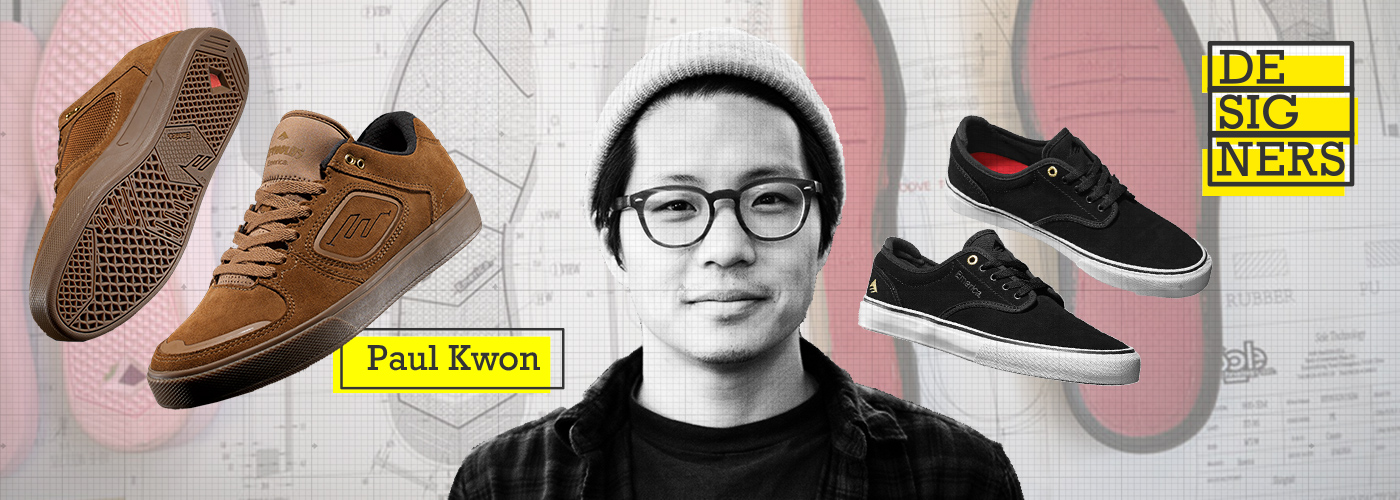
Designers: Paul Kwon

Designers: Paul Kwon

Otro lujo que nos damos en sk8shoesba, contar con el diseñador de una de nuestras marcas preferidas, Emerica.
Paul Kwon nos cuenta un poco como empezó en esto del diseño de zapatillas, en que se inspira, sus materiales preferidos para trabajar, entre otras cosas.
Espero que disfruten de esta gran entrevista tanto como lo hicimos nosotros.


[button size=’small’ style=» text=’ENGLISH VERSION’ icon=» icon_color=» link=’#english’ target=’_self’ color=» hover_color=» border_color=» hover_border_color=» background_color=» hover_background_color=» font_style=» font_weight=» text_align=» margin=»]


–  ¿Cúal fue tu primer creación como diseñador de zapatillas? Ahora mirando un poco para atrás, ¿cambiarías algo?
Hice el pro model de Daniel Cardone cuando trabajaba en Quiksilver.
No creo que cambiaría nada. Fue una gran experiencia de aprendizaje y una gran oportunidad. Estoy agradecido por ese día que me dejaron trabajar en el sin experiencia previa.


Designers: Paul Kwon


– ¿Qué te hizo querer diseñar zapatillas de skate y quién o qué te inspiró para hacerlo?
Ser skater y enamorarme del skate me hizo querer diseñar zapatillas.
Mi madre jugó un papel importante en alentarme a seguir una carrera de diseño de calzado.


– ¿Quiénes son algunos de tus diseñadores favoritos y por qué?
Realmente no sigo a muchos diseñadores.
Me gustan los chefs, específicamente René Redzepi de NOMA, David Chang de Momofuku, Danny Bowien de Misión China, y Chad Robertson de Tartine.


–  ¿De qué trabajas?
Diseñador de zapatillas en Emerica.


Designers: Paul Kwon


–  ¿Trabajaste para otras marcas?
Sí, trabajé en HUF, Dekline, Vans, DC, Element Skateboards y Quiksilver.


– ¿Qué habilidades necesitas para convertirte en un diseñador zapatillas de skate?
Alto dominio de la resolución de problemas, conocimiento de Adobe Illustrator, una buena actitud y algún tipo de habilidades de dibujo manual.
Estas cosas son buenas, pero no siempre importan.


– Cuéntanos un poco sobre el proceso de creación de una zapatilla, desde el papel hasta el producto final.
Paso 1, Recibe comentarios de ventas y marketing y crea un brief. Asegurarse de incluir elementos como el precio, la estrategia de distribución y la orientación al consumidor.
Paso 2, Dibuja las zapatilla.
Paso 3, Dibuja más zapatillas.
Paso 4, Elige una.
Paso 5, Crea un paquete de tecnología para el zapato que diseñaste.
Paso 6: Envíe el paquete de tecnología a China y espere a que envíen las muestras.
Paso 7, Revisa las muestras hasta que lo hagas bien.
Paso 8, Fotografía tu creación y ponla en un catálogo.
Paso 9: Crea un plan de marketing para ayudar a vender las zapatillas.
Paso 10, Entrega el producto a los minoristas y vende las zapatillas.
Paso 11, Ir de vacaciones.


Designers: Paul Kwon


–  ¿Cuánto demora todo ese proceso?
Alrededor de dos años para obtener el modelo en las calles.


– ¿Cuáles son algunas dificultades para convertirse en un diseñador de calzado de skate que la mayoría de la gente no conoce?
Qué tan importante es la comunicación. Desde poder presentar sus ideas y también rendir cuentas a diferentes departamentos como, ventas y marketing, así como a los miembros del team.
Ser capaz de interpretar la entrada de todas estas fuentes puede ser difícil de hacer, pero en última instancia, se logra un mejor producto al final.
La colaboración es clave.


Designers: Paul Kwon


– ¿Cuáles son tus materiales favoritos para trabajar? ¿Prefieres siluetas simples o zapatillas más técnicas?
He estado investigando mucho sobre el poliuretano. Simple es siempre lo mejor.


“LA COLABORACIÓN ES CLAVE.”


– ¿Cuál es tu era favorita de diseño de zapatillas de skate?
Ahora mismo. ¡Lo nuevo siempre es lo mejor !.


“SIMPLE ES SIEMPRE LO MEJOR.”


– ¿Con qué cosas usualmente te inspiras, comienzas desde cero o eliges una zapatilla y la modificas?
Depende de lo que se pide en el brief. Lo mejor es ser flexible con los procesos. La mayoría de las veces tomo inspiración de mis amigos.


– Al diseñar un pro model, ¿se involucran los skaters en el proceso de diseño? ¿Cómo es trabajar con ellos?
Eso también depende del skater.
Algunos skater son más prácticos que otros. Es mi trabajo medir su nivel de participación y adaptarme a sus necesidades.
Trabajar con nuestro equipo ha sido increíble. Realmente tenemos un grupo único de gente con personalidades realmente interesantes.


“ALGUNOS SKATER SON MÁS PRÁCTICOS QUE OTROS. ES MI TRABAJO MEDIR SU NIVEL DE PARTICIPACIÓN Y ADAPTARME A SUS NECESIDADES.”


– En el último año, la tecnología finalmente volvió a las zapatillas de skate. Qué piensas sobre esto. ¿Prefieres las siluetas más simples?
No creo que la tecnología se haya ido. En todo caso, se volvió más sutil. Simple es siempre lo mejor.


– De todas las zapatillas que diseñaste, ¿cuáles son tus favoritas y por qué?
Me gusta las nuevas zapatillas de Andrew, las Reynolds G6. Muchas cosas simplemente se juntaron en ellas. ¡Además funcionan genial!


– Si tuviera que elegir sus 5 zapatillas de skate favoritas hoy, ¿cuáles serían? Y la vieja escuela?
Emerica Mute, Emerica Jamie Thomas Primer Pro model, Etnies Sal 23, Axion KCK, Vans old Skool.


Designers: Paul Kwon


– ¿Puedes contarnos un poco sobre lo que Emerica tiene para ofrecer en los próximos años?
Muchas cosas emocionantes ¡Manténganse al tanto!

– ¿Qué modelo diría que ha sido el más bienvenido por las tiendas y los consumidores?
Cualquier cosa Reynolds y de Romero. Yo diría que la mayor parte de la línea Emerica también es bien recibida ..


– Para cerrar, algo que quieras decir a todos aquellos que quieran adentrarse en el mundo del diseño de las zapatillas de skate, ¿alguna recomendación?
Diviértete, sé agradable y patina porque lo amas.


– What was your first creation as a shoe designer and looking back on it, do you wish you can change anything on it now?
I did a pro model for Daniel Cardone when I worked at Quiksilver. I don’t think I would change anything. It was a great learning experience and an awesome opportunity. I’m thankful to this day that they let me work on that with no prior experience.


– What made you want to design skate shoes and who or what inspired you to do so?
Being a skateboarder and falling in love with skateboarding made me want to design skate shoes. My mom played a big part in encouraging me to pursue a career in footwear design.


– Who are some of your favorite designers and why?
I don’t really follow too many designers. I like chefs. Specifically Rene Redzepi of NOMA, David Chang of Momofuku, Danny Bowien of Mission Chinese, and I’ll throw Chad Robertson of Tartine in there for the wild card.


– What is your job?
Lead Footwear Designer and Merchandiser of Emerica.


– Did you work for other brands?
Yes. I have worked for HUF, Dekline, Vans, DC, Element Skateboards and Quiksilver.


– What skills do you need to become a skateboard designer?
High proficiency in problem solving, being knowledgeable in Adobe Illustrator, a good attitude and some kind of manual drawing skills.
These things are good but they don’t always matter.


– Tell us a little about the process of creating a shoe, from the paper to the final product.

  • Step 1, take feedback from sales and marketing and create a brief. Make sure to include things like price points, distribution strategy and consumer targeting.
  • Step 2, draw shoes.
  • Step 3, draw more shoes.
    Step 4, pick a shoe you drew.
  • Step 5, create a tech pack for the shoe you designed.
  • Step 6, Send tech pack to china and wait for pull over/ sample.
  • Step 7, Revise samples until you get it right.
  • Step 8, Photograph your creation and put it in a catalog.
  • Step 9, Create marketing plan to help sell shoe.
  • Step 10, Deliver shoe to retailers and sell shoe.
  • Step 11, Go on vacation.


– Generally, how long has that process taken?
About two years to get a product from brief to sitting in the customers hand.


– What are some difficulties that lie in becoming a skate shoe designer that most people don’t know about?
How important communication is. From being able to present your ideas and also being accountable to different departments like sales and marketing as well as the team riders.
Being able to interpret input from all these sources can be difficult to juggle but ultimately makes for a better product in the end.
Collaboration is key.


– What are your favorite materials to work with? Do you prefer simple silhouettes, or tech?
I’ve been doing a lot of research on Polyurethane. Simple is always best.


– What is your favorite era of skate shoes design?
Right now. New stuff is always the best!.


– With what things do you usually inspire yourself, do you start from zero, or do you choose a shoe and modify it?
It depends on what the brief calls for. It’s best to be flexible with your processes. I mostly get inspiration from my friends.


– When designing a pro model, do skaters get involved in the design process? What is it like working with them?
That also depends on the skater. Some skaters are more hands on than others. It’s my job to gauge their level of involvement and adjust to fit their needs. Working with our team has been awesome. We truly have a unique group of guys with really interesting personalities.


– In the last year, technology finally returned to skate shoes. What do you think about this. Do you prefer the simpler silhouettes?
I don’t think technology ever left. If anything it just got more subtle. Simple is always best.


– Of all the shoes you designed, what are your favorites and why?
I like Andrew’s new shoe the Reynolds G6. A lot of things just kinda came together on that one. Plus it skates great!


– If you had to choose your 5 favorite skate shoes today, what would they be? And the old school?
Emerica Mute, Emerica Jamie Thomas First Pro model, Etnies Sal 23, Axion KCK, Vans old Skool.


– Can you tell us a little about what Emerica has to offer for the next few years?
Lots of exciting stuff. Stay tuned!


– Which model would you say has been the most welcomed by shops and consumers?
Anything Reynolds and anything Romero. I’d say most of the Emerica line is also well received…


– To close, something you want to say to all those who want to get into the world of skate shoe design, any recommendations?
Have fun, Be nice and skate because you love it.


[latest_post type=’boxes’ number_of_posts=’3′ number_of_colums=’3′ order_by=’menu_order’ order=’DESC’ category=’Designers’ text_length=» title_tag=’h4′ display_category=’0′ display_time=’0′ display_comments=’0′ display_like=’0′ display_share=’0′]

Designers: Aaron Hoover

En sk8shoesba les presentamos una nueva sección, Designers. Entrevistas a los diseñadores de distintas marcas de zapatillas de skate.
Para la primera entrega tenemos el orgullo de contar con Aaron Hoover, Footwear Designer de Lakai. En la entrevista Aaron nos cuenta como surgió esto de diseñar zapatillas de skate, sus influencias, el proceso y mucho mas.
Espero que lo disfruten tanto como lo disfruto yo.
Agradecer a Aaron por la predisposición desde el primer contacto.
Sin mas preámbulos, los dejo con una gran nota!!!


[button size=’small’ style=» text=’ENGLISH VERSION’ icon=» icon_color=» link=’#english’ target=’_self’ color=» hover_color=» border_color=» hover_border_color=» background_color=» hover_background_color=» font_style=» font_weight=» text_align=» margin=»]


Soy de Ohio, descubrí el skateboarding cuando tenía 12 o 13 años. Mis amigos y yo conseguimos un trabajo para Strength Magazine a mediados de los 90. En el 2001 me mudé a Long Beach, conseguí un trabajo en DVS como diseñador gráfico, al año pasé al departamento de diseño de zapatillas. Después de 8 meses/ o 1 año, me fuí a Lakai como director de diseño. A partir de ahí, me casé, tuve hijos y me mudé a Ohio de nuevo. Trabajé en Habitat Footwear diseñando su colección de zapatillas, luego estuve en Fallen por un año, y ahora de vuelta a Lakai. Esa es la versión rápida de mi vida …


–  ¿Cúal fue tu primer creación como diseñador de zapatillas? Ahora mirando un poco para atrás, ¿cambiarías algo?
La primer zapatilla que diseñe que recuerdo fueron las Huf 3, para DVS.
Kelly Kikuta, (el Director de Diseño de DVS en ese momento) voló a San Francisco y pasó unos días con Keith, para trabajar en su 3er pro model. Esto fue cuando abrió su primera tienda en San Francisco. Mirando hacia atrás, no cambiaría nada.


– ¿Qué te hizo querer diseñar zapatillas de skate y quién o qué te inspiró para hacerlo?
Siempre he estado en los en el mundo de las zapatillas. Tus zapatillas definen tu look o cómo te sientes ese día. Es un reflejo de tu personalidad. Bueno, como la mayoría, el skateboard inspira la creatividad. También me gusta mirar atrás a las zapatillas de skate más antiguas, Airwalk Fahrenheit Series, Vision Street Wear, Vans, DC.


– ¿Quiénes son algunos de tus diseñadores favoritos y por qué?
Mis diseñadores favoritos son Dieter Rams y Charles y Ray Eames. El impacto que han tenido en el diseño del producto es atemporal. Han creado una base para que todos los diseñadores aprendan y obtengan inspiración. Los 10 principios de diseño de Rams, son en mi opinión,  algo que todos los diseñadores deberían saber y tratar de seguir.


–  ¿De qué trabajas?
Soy diseñador Senior en Lakai. Desde fines del 2017 hasta la actualidad, he sido responsable de todo el diseño de calzado.


–  ¿Trabajas para otras marcas?
Hago algunos proyectos no relacionados con las zapatillas. Me gusta diseñar camisetas para shops o gráficos de tablas para algunos amigos. Lakai es mi prioridad #1.


– ¿Qué habilidades necesitas para convertirte en un diseñador zapatillas de skate?
Bueno, es importante entender el skate y lo que los skaters buscan en el calzado. Conocer el mercado también es clave, colores, materiales … tendencias. En cuanto a las habilidades, debes ser capaz de dibujar y pasar todo el tiempo que puedas observando todo lo que rodea a una zapatilla.


– Cuéntanos un poco sobre el proceso de creación de una zapatilla, desde el papel hasta el producto final.
Bueno, el proceso lleva un tiempo. Aquí está el proceso general …
Todo comienza con un boceto. Una vez que estás contento con el boceto, se crea una especificación técnica que cubra todos los detalles que la fábrica necesitará saber. Esto es básicamente las instrucciones o el manual para la fábrica.
Lo enviamos por correo electrónico a la fábrica y entre 7-15 días más tarde recibimos una muestra de la parte superior (no la suelas), planos de la suela y otros componentes moldeados para la zapatilla. Hacemos una revisión, y mas revisiones, esto se repite hasta que todo esté correcto. A partir de ahí, se seleccionan los materiales y los colores. Como en el proceso anterior, se revisa hasta que esté correcto. En este momento el proceso de desarrollo demora entre 4 y 6 meses.
Normalmente, hacia el final del desarrollo se realiza un viaje a la fábrica para firmar las muestras finales. En este punto, el área ventas se hacen cargo de la parte que resta, en alrededor de un año más tarde están en la pared de los skateshops.


–  ¿Cuánto demora todo ese proceso?
Desde los primeros bocetos, hasta que está en las calles, el proceso demora aproximadamente un año.


– ¿Cuáles son algunas dificultades para convertirse en un diseñador de calzado de skate que la mayoría de la gente no conoce?
Comprender el skateboarding sería # 1. El # 2 es precio / margen. Diseñar un gran producto al mejor precio.


– ¿Cuáles son tus materiales favoritos para trabajar? ¿Prefieres siluetas simples o zapatillas más técnicas?
Me gusta experimentar con materiales nuevos y diferentes, pero lo mejor para el skateboarding es la gamuza, por supuesto. Me gustan todos los tipos de siluetas. Diré que las siluetas simples son las más difíciles de diseñar. Es un desafío hacer que una silueta simple se vea diferente y única.


“Es un gran desafío lograr que una silueta de diseño simple, luzca diferente y única.”


– ¿Cuál es tu era favorita de diseño de zapatillas de skate?
Mediados de los 90s … Fue entonces cuando cada marca tenía su propio estilo / apariencia. Realmente quiero que vuelva.


“A mediados de los 90s, En esa época cada marca tenía su propio estilo”


– ¿Con qué cosas usualmente te inspiras, comienzas desde cero o eliges una zapatilla y la modificas?
Extraigo inspiración de todas partes … como la mayoría de los diseñadores. Desde autos, a música, a videos de skate. Cada temporada, miró la colección


– Al diseñar un pro model, ¿se involucran los skaters en el proceso de diseño? ¿Cómo es trabajar con ellos?
Sí, absolutamente. Los pro models deberían ser un reflejo del skater. Esta es su oportunidad de hacer una zapatilla que exprese su personalidad y estilo. Cada skater del equipo es diferente, pero la mayoría tiene una idea general de lo que quiere.


“Los Pro Models son el fiel reflejos del skater. Es una oportunidad única que tienen para expresar en esa zapatilla, su personalidad y su estilo.”


– En el último año, la tecnología finalmente volvió a las zapatillas de skate. Qué piensas sobre esto. ¿Prefieres las siluetas más simples?
Todo viene en ciclos, ¿verdad? Es hora de evolucionar el calzado de skate. Entonces me gusta que la tecnología vuelva. Lo veo más como una categoría, ahora. Siento más las siluetas simples, el aspecto clásico encaja bien en el skateboard, pero también lo hace la tecnología, ya que el skateboard tiene un alto impacto … especialmente en tus pies. Una zapatilla que parece simple pero tiene características de tecnología sin parecer demasiado tecnológico es ideal.


– De todas las zapatillas que diseñaste, ¿cuáles son tus favoritas y por qué?
Huf 3, porque fue mi primer proyecto profesional y Keith es un tipo genial. Las Carroll Select también fueron un proyecto divertido. Me gusta trabajar con Mike Carroll, siempre trae muchas ideas a la mesa. Honestamente, trabajar en pro models es lo que más me amo. Me gusta colaborar con otras personas creativas.


– ¿Qué te hizo querer diseñar zapatillas de skate y quién o qué te inspiró para hacerlo?
Crecí patinando, eso es todo lo que hacía de chico. No era mi objetivo diseñar zapatillas de skate algún día. Creo que estar en skateboarding tanto me llevó a diseñar zapatillas de skate. Trabajando para algunas marcas de skate, finalmente, conseguir un trabajo en DVS. Kelly Kikuta se arriesgó a subirme al departamento de calzado de DVS. ¡Muchas gracias a KK!


– Si tuviera que elegir sus 5 zapatillas de skate favoritas hoy, ¿cuáles serían? Y la vieja escuela?
Lo mantendré viejo y sin zapatillas de LakaiKoston 1, Sal 23, Sal ’97, Half Cab y Airwalk Prototype.


– ¿Puedes contarnos un poco sobre lo que Lakai tiene para ofrecer en los próximos años?
Cuando volví a Lakai el año pasado, era importante para mí, hacer mejoras, siempre que fuera posible. Estamos trabajando en nuevas tecnologías para mejorar el rendimiento arriba y abajo de la tabla. Las Bristol es el primer modelo que utiliza la tecnología Para-mount. Este estilo tiene un ajuste mejorado que soporta el pie, una mejor amortiguación del talón para absorber el alto impacto. También lanzamos un nuevo estilo llamado EVO. Su propósito es darle a tus pies un descanso de los golpes que toman durante las sesiones de skate. La parte superior es tejida,  para una máxima comodidad cuando no estás patinando. Somos una marca de calzado con profundas raíces en el skateboarding. Es importante ofrecer estilos para el team y para los clientes leales, también cuando no están patinando. Es una «evolución» de la marca.


– Para cerrar, algo que quieras decir a todos aquellos que quieran adentrarse en el mundo del diseño de las zapatillas de skate, ¿alguna recomendación?
Yo diría que sólo te pongas calzado de skate si eres un apasionado del skateboarding. Disfruta el proceso que lleva llegar allí. Mantén la mente abierta, ya que nunca se sabe lo que puede aprender de otra persona.


From Ohio, found skateboarding when I was 12 or 13. My friends and I got a job working for Strength Magazine in the mid 90s. Move to Long Beach in 2001, got a job at DVS as a graphic designer then moved into footwear design within a year. After a 8 months to a year, moved over to Lakai as the design director. From there, got married, had kids and moved back to Ohio. Worked at Habitat designing their footwear collection. Fallen footwear for a year then back to Lakai. That’s the quick version


–  What was your first creation as a shoe designer and looking back on it, do you wish you can change anything on it now?
My first shoe that I remember was the Huf 3 for DVS. Kelly Kikuta, (the DVS Design Director at the time) flew up to SF and spent a few days with Keith to work on his 3rd shoe. This was when he opened his first store in SF. Looking back, I wouldn’t change anything.


–  What made you want to design skate shoes and who or what inspired you to do so?
I’ve always been into shoes. Your shoes define your look for that day or how you are feeling that day. It’s reflects your personality. Well, like most, skateboarding inspires the creativity. I also like looking back at older skate shoes, Airwalk Fahrenheit Series, Vision Street Wear, Vans, DC.


–  Who are some of your favorite designers and why?
My favorite designers are Dieter Rams and Charles and Ray Eames. The impact they’ve had on product design is timeless. They have created a foundation for all designers to learn from and pull inspiration. Rams’ 10 design principles are in my opinion something all designers should know and try to follow.


–  What is your job?
Lakai Senior Designer. From Holiday 2017 to current I’ve been responsible for all footwear design.


–  Did you work for other brands?
I’ll do some projects not related to footwear. Like designing shop tees or board graphics for homies. Lakai is my #1 priority.


–  What skills do you need to become a skateboard designer?
Well, it’s important to understand skateboarding and what skateboarders look for in footwear. Knowing the market is key as well, colors, materials… trends. As for skills, you need to be able to draw and spend as much time in a footwear as you can.


–  Tell us a little about the process of creating a shoe, from the paper to the final product.
Well, the process takes a while. Here’s the general process… It all starts with a sketch. Once you are happy with the sketch, build a technical spec covering all the details the factory will need to know. This is basically the instructions or manual for the factory. Email it to the factory and 7-15 days later you receive a sample upper (no sole just the upper pattern), blueprint of the outsole and any other molded components to the shoe. Review, make revisions and repeat until everything is just right. From there move to colors and materials. Same thing, revise until its just right. By this time it’s anywhere from 4-6 months into the development process. Typically towards the end of development you make a trip to the factory to sign-off on the final samples. At this point sales takes over and about a year later they are on the wall at the skate shops.


–  Generally, how long has that process taken?
From concept to shoes on the wall at the shop, takes about a year.


–  What are some difficulties that lie in becoming a skate shoe designer that most people don’t know about?
Understanding skateboarding would be #1. The #2 is price / margin. Designing great product for the best price.


–  What are your favorite materials to work with? Do you prefer simple silhouettes, or tech?
Always exploring new and different materials but the best for skating is suede of course. I like all types of silhouettes. I will say the simple silhouettes are the toughest to design. It’s a challenge to make a simple silhouette look different and unique.


–  What is your favorite era of skate shoes design?
Mid 90’s… That’s when each brand had their own style / look. I really want that to come back.


–  With what things do you usually inspire yourself, do you start from zero, or do you choose a shoe and modify it?
I pull inspiration from everywhere… like most designers. From cars, to music, to skate videos. Each season, I look over the collection


–  When designing a pro model, do skaters get involved in the design process? What is it like working with them?
Yes, absolutely. Pro models should be a reflection of the pro. This is their opportunity to make a shoe that expresses their personality and style. Each team rider is different but most typically have a general idea what they want.


–  In the last year, technology finally returned to skate shoes. What do you think about this. Do you prefer the simpler silhouettes?
Everything comes in cycles, right? It’s time to evolve skate footwear. So I like that tech is coming back. I see it more as category now. I feel simple silhouettes, classic looks fit well in skateboarding but so does tech as skateboarding is high impact… especially on your feet. A shoe that looks simple but has tech features without looking too tech is ideal.


–  Of all the sneakers you designed, what are your favorites and why?
Huf 3, because it was my first pro project and Keith is a rad guy. Carroll Select was a fun project as well. I like working with Carroll he always brings a lot of ideas to the table. Honestly, working on pro shoes are my favorite. I like to collaborate with other creative people.


–  What made you want to design skate shoes and who or what inspired you to do so?
I grew up skateboarding, that’s all we did. It’s wasn’t a goal of mine to some day design skate shoes. I think being around skateboarding so much lead me to designing skate shoes. Working for a few skate brands and eventually getting a job at DVS. Kelly Kikuta took a chance bringing me on board in DVS footwear department. Big thanks to KK!


–  If you had to choose your 5 favorite skate shoes today, what would they be? And the old school?
I’ll keep it old and non Lakai… Koston 1, Sal 23, Sal ’97, Half Cab and Airwalk Prototype.


–  Can you tell us a little about what Lakai has to offer for the next few years?
When I came back to Lakai last year, it was important for me to make improvements wherever possible. We are working on new technologies to improve performance on and off the board. The Bristol the first of new styles that utilizes the technology. This style has an improved fit that supports your foot and better heel cushioning to absorb impact. We’ve also released a new style call the EVO. It’s purpose is to give your feet a break from the beating they take during skating. The upper is all knit for maximum comfort when you’re not skating. We are a footwear brand with deep roots in skateboarding. It’s important to offer styles for the team and loyal customers when they are off the board. It’s an “evolution” of the brand.


–  To close, something you want to say to all those who want to get into the world of skate shoe design, any recommendations?
I’d say only get into skate footwear if you are passionate about skateboarding. Enjoy and the process it takes to get there. Keep an open mind as you never know what you can learn from someone else.


[latest_post type=’boxes’ number_of_posts=’3′ number_of_colums=’3′ order_by=’menu_order’ order=’DESC’ category=’Designers’ text_length=» title_tag=’h4′ display_category=’0′ display_time=’0′ display_comments=’0′ display_like=’0′ display_share=’0′]